FROM VAUGHAN
Dance Your Jive Into The Floor
Jive scares a lot of dancers. The music is quick, the energy is high, and the natural reaction is to go bigger and lift everything up.
That's exactly what makes it fall apart.
Big steps and high knees turn Jive into a pony ride. You can't keep up with the music, and the rhythm gets ugly. The rule I was taught right at the start of my career: dance the Jive into the floor.
Two ideas make that possible.
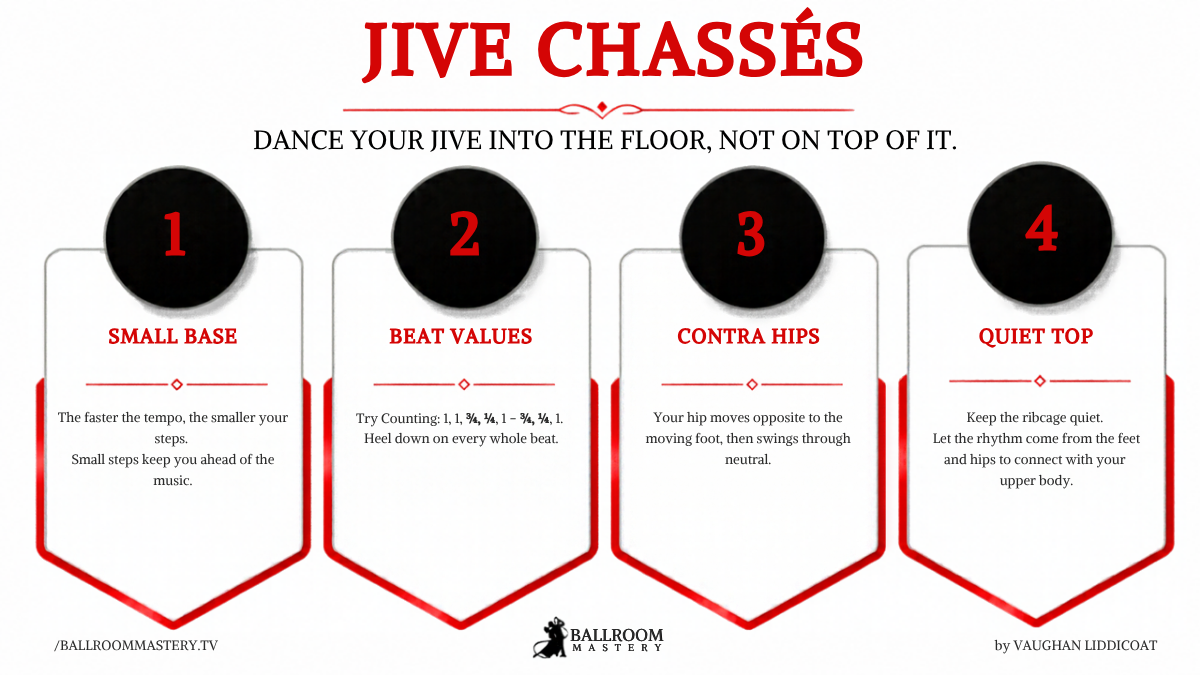
First, the faster the tempo, the smaller the base. Small steps let you stay ahead of the music instead of chasing it.
Second, every dancer counterbalances. As long as you're not on the floor, your body is counterbalancing something. The question is whether you're doing it beautifully or not. Let your head lead a chassé and you're thrown off. Let your feet tap about and the rhythm goes mushy.
The answer sits in the middle of the body: the hips move opposite to the moving foot. Get that, and Jive suddenly feels slower than you thought.
So tell me: is Jive a dance you love, or one you avoid? Hit reply. I read every one.
Vaughan
P.S. Members get the full beat-value and hip-action drill below. Join here to unlock it.
"The faster the tempo, the smaller the base."
This Edition's Tutorial
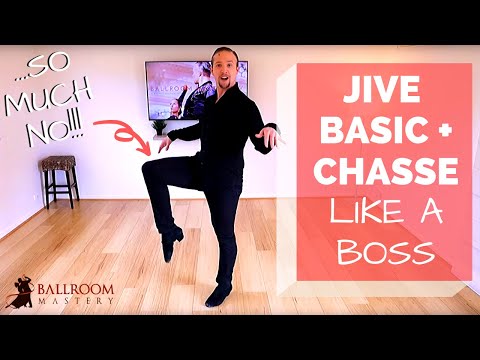
Jive Chassés: Feet, Hips & Body Rhythm
Problem: Your Jive feels rushed, bouncy or tappy, and you can't keep up with the music.
Promise: Learn the footwork, beat values and contra hip action that give Jive a controlled, grounded rhythm.
MASTERY MEMBERSHIP
Ask Vaughan's Genie Anything
When your Jive feels rushed and you can't keep up with the music, don't wait for your next lesson. Open the Mastery Genie and type:
"How do I stop my Jive chassés feeling rushed?"
In seconds you're watching my answer, pinpointed to the exact second, with lessons like Jive Starter: 7 Chasses to fix it today.
$97 a month. Cancel anytime.
When Ulrich worked on crispness in his Jive, his rhythm sharpened, his posture improved, and his stamina went from about one minute to about two.
Mastery Member Insight.